The Amazing Discovery Story (Postscript – Photography Insights)
Having spent eight years working at Wisconsin’s Cave of the Mounds during my younger years, visiting Carlsbad Caverns National Park was both an extraordinary underground adventure and a tough photographic challenge.
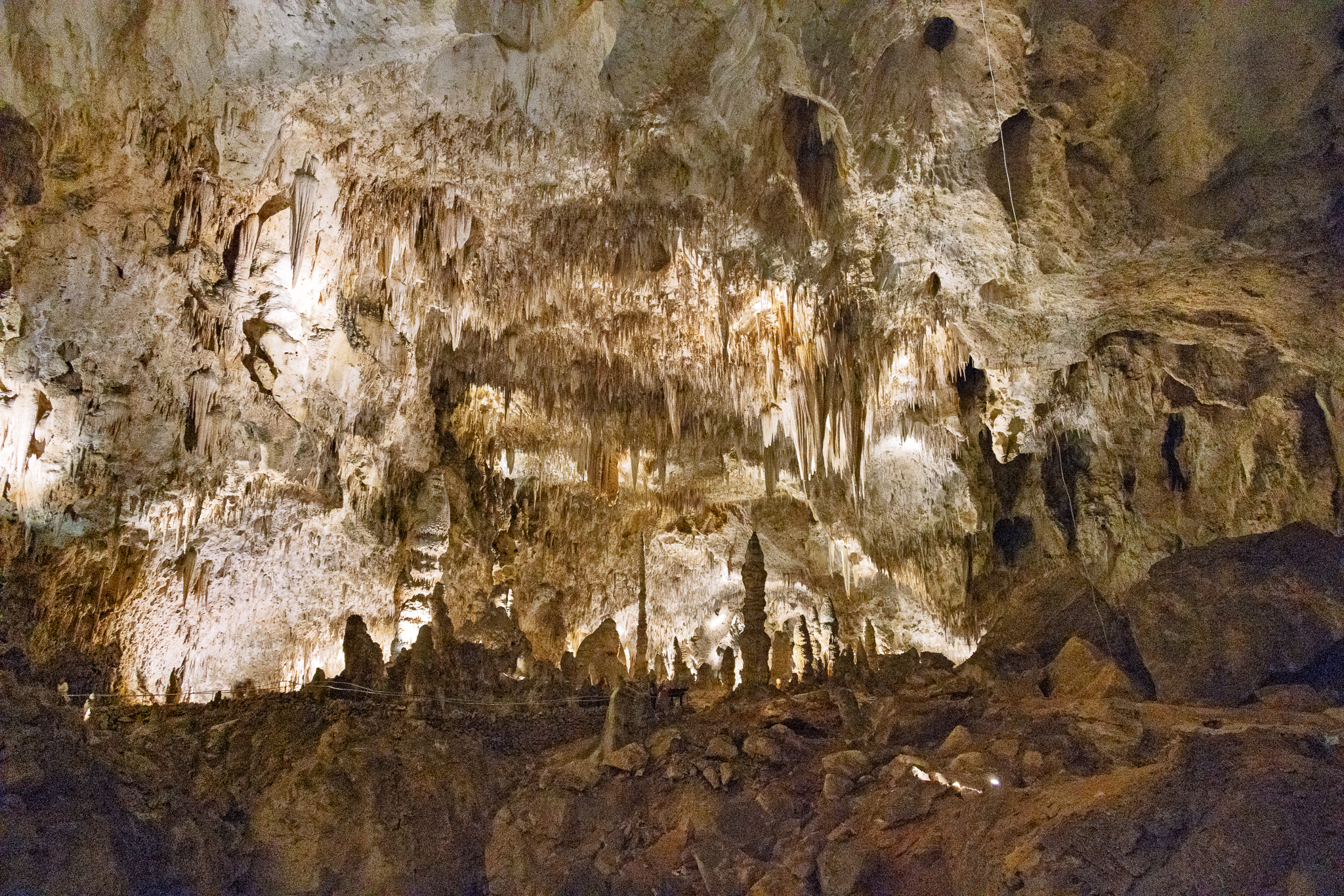
Capturing photos in caves like Carlsbad Caverns isn’t easy because the artificial lighting is kept minimal to protect the fragile ecosystem. Even the best flash units rarely illuminate the cave effectively. While our eyes naturally adapt to low light, cameras adjust by changing three primary settings: exposure time (how long the shutter stays open for light to hit the sensor), aperture opening (like the pupil of the eye opening wider in dark conditions), and ISO setting (the responsiveness of the camera’s internal electronic sensor). Each of these have limits and the compensation may not be enough to produce a high-quality picture. To complicate things further, tripods are not allowed into the cavern, as narrow walkways cannot be blocked with all the visitors present. A tripod helps steady a camera so you can keep the shutter open for seconds instead of hundredths of a second, the time we use for a normal outdoor shot. So, for this work, I set the camera on handrails as a makeshift tripod. Finally, I took several shots of the same thing. Then in post processing, I merged multiple images together, a technique called High Dynamic Range (HDR). Your phone camera does a very similar thing automatically in low light situations. Thank you for joining me on this photographic journey beneath the surface at Carlsbad Caverns National Park (Carlsbad, New Mexico).
≡Canon R5/RF24-240 HDR 24mm f/4 1/13sec iso-12800